There are plenty of reasons you might want to remove a radiator and whether that’s for redecorating, replacing it with a heated towel rail or giving it a thorough clean - it still needs to be removed safely every time.
While it can feel like a daunting job at first, removing a radiator is very doable with the right prep and a calm approach. This guide shows you how to remove a radiator safely and confidently, without unnecessary stress (or soggy socks).
Tools you'll need

How to remove a radiator - step by step
If this is your first time removing a radiator, don’t worry. Taking it one step at a time is the best approach. Let’s get into it!
1. Switch off your heating
Before we get hands-on, take a minute to check everything is turned off and cooled down. This is a really important first step and will prevent any accidents.
2. Turn off the valves
You’ll need: Adjustable spanner
On the radiator you’re removing, turn the thermostatic radiator valve (TRV) to the off position.
If your radiator doesn’t have a TRV - which is common on older models - you’ll usually have a simple wheelhead valve instead. Turn this fully clockwise to close it.
Once the valves are off, move to the other side of the radiator. Here you’ll find the lockshield valve. Remove the plastic cap and use your spanner to turn the valve clockwise until it’s fully closed. As you do this, count the number of turns it takes and make a note - this helps you return it to the same setting when the radiator goes back on.
Find out more about: Thermostatic Radiator Valves (TRVs).

3. Drain the radiator
You’ll need: Two adjustable spanners and your bowl.
Place your bowl underneath one of the valves. Use one spanner to hold the valve steady and the other to loosen the nut that connects the radiator to the valve.
Water will begin to drain out, so keep the bowl in place and take it slowly.
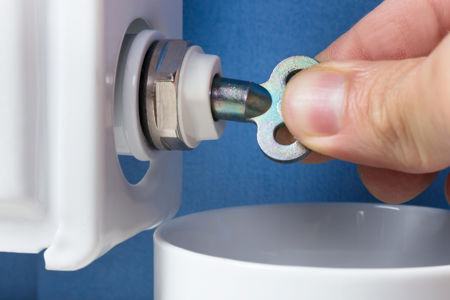
4. Open the bleed valve
You’ll need: Radiator bleed key
Use your bleed key to open the bleed valve at the top of the radiator. This allows air in and helps more water drain out cleanly.
5. Loosen the other valve
Close the bleed valve, then move to the valve on the other side of the radiator. As before, loosen the nut carefully and catch any remaining water in your bowl.
Opening the bleed valve again will help drain the last of the water.
6. Disconnect the radiator
You’ll need: Two adjustable spanners, bowl and some old towels to catch any spills and splashes
Once both valves are loose, fully disconnect the radiator. Gently tilt it to one side to release any remaining water or residue into the bowl. This part can be a little splashy - towels underneath are always a good idea!
7. Lift the radiator off the brackets
You’ll need: A steady grip (and possibly an extra pair of hands)
Carefully lift the radiator upwards and away from the wall brackets. Radiators can be heavier than they look, so it might be better to ask for help before attempting this step.
Can you remove a radiator and still use your heating?
Yes - you can remove a radiator and continue using your central heating. However, once it’s off the wall, your system may need rebalancing to make sure heat flows evenly throughout your home.
And that’s it - radiator removed. If you don’t feel confident with the steps, asking a family friend or a professional to assist is best. While your radiator is off the wall, it’s also a great opportunity to clean out any sludge that may have built up inside. And if you feel like it's rime for a new look, our comprehensive guide on how to choose a radiator has all the information you need to making the right choice for your home.