Buying a radiator can feel more daunting than it should. There’s a huge amount of choice, plenty of opinion and a lot of technical language that doesn’t always help you make a decision.
The good news? Most radiator choices come down to a handful of simple questions. Once you know how you’ll heat it, where it’s going, and what you want the room to feel like, everything else starts to fall into place.
This guide is here to help you get there - step by step, without the overwhelm.
Know what you need?
Jump straight to the right info below.


First things first: how will your radiator be heated?
Before thinking about shape or style, it’s worth deciding how you want your radiator to work day to day. This single decision narrows the field more than anything else.
Central heating radiators
These are the most familiar option. Hot water flows from your boiler into the radiator, which then releases heat into the room. The amount of warmth depends on the radiator’s size, material and design.
Central heating radiators are a reliable, efficient choice for most rooms in the home, particularly where you want consistent warmth throughout the day.
Best for:
- Whole-home heating
- Living rooms, bedrooms, hallways
- Traditional and modern systems
View central heating radiators
Electric radiators
Electric radiators have moved well beyond being a secondary heating option. With improvements in efficiency, control and design, they’re now being chosen as a primary heating solution in more and more homes.
Because each radiator works independently, electric heating gives you far greater control over how and when different spaces are heated. You can warm the rooms you’re actually using, rather than running a whole system just to take the chill off one area.
They’re also particularly appealing in homes without gas, in new-builds and in properties where flexibility matters - such as home offices, extensions or rooms with irregular usage. Combined with smart controls and off-peak tariffs, electric radiators can offer a modern, responsive way to heat an entire home, not just individual rooms.
Best for:
- Homes without gas
- Converted spaces, home offices
- Rooms you only heat occasionally
Dual fuel radiators
Dual fuel radiators give you the best of both worlds. They connect to your central heating system but also include an electric element, allowing you to heat them independently when the boiler is off.
They’re most commonly used for towel rails, but the added flexibility makes them a smart choice anywhere you want a little extra control.
Best for:
- Bathrooms
- Towel rails
- Those “why is it freezing in July?” moments
Now, think about the radiator shape that’s best for your space
This is where the fun part begins. Different radiator types are designed for different spaces, so it’s really about matching the right one to your room.
This is less about right or wrong, and more about matching the radiator to how the room works.
Horizontal radiators
Horizontal radiators are the most familiar shape, often placed under windows or along longer walls. They’re easy to fit into most layouts and come in the widest range of sizes and finishes.
If you’re after a dependable, no-nonsense solution, this is often where people land.
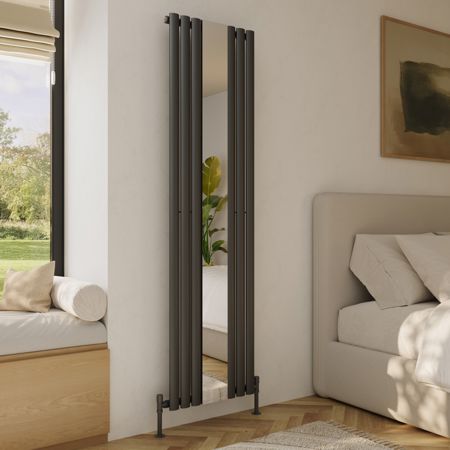
Vertical radiators
Vertical radiators are tall and slim, making them ideal for rooms where wall width is limited. They’re also more visually striking, which is why they’re often used as a design feature.
They work particularly well in modern interiors, hallways and open-plan spaces where you want to free up floor area.
Column radiators
Column radiators are made up of connected vertical tubes, giving them a distinctive look and generous heat output. While they’re often associated with period homes, they’re available in a wide range of modern finishes too.
They’re a great option if you want warmth with a bit of character.
Single panel radiators
Single panel radiators are slim, straightforward and sit close to the wall. They’re a good choice where space is limited or where you want a discreet, low-profile look.
They tend to work best in smaller rooms or well-insulated spaces that don’t need very high heat output.
View all single panel radiators
Double panel radiators
Double panel radiators use two panels working together to produce more heat in the same footprint. They’re a practical option for larger rooms or spaces that lose heat more easily.
While they’re slightly deeper than single panels, they offer excellent warmth without needing to go oversized in height or width.
View all double panel radiators
Heated towel rails
Designed primarily for bathrooms, heated towel rails keep towels warm and dry while also helping to heat the room. They typically use less energy than larger radiators and are especially effective in smaller spaces.
Dual fuel options make them useful all year round, not just during the heating season.
Product spotlight: a few styles worth starting with
By now, you’ll probably have a sense of what kind of radiator suits your space - whether that’s something slim and modern, or more traditional with a bit of presence.
If you’d rather not scroll endlessly, these are a few radiator styles we'd definitely recommend.
Best all-rounders: safe choices that rarely disappoint
Not everyone wants to weigh up every detail. These radiator styles strike a great balance between performance, versatility and looks, making them an easy addition for most homes.
Space-saving and modern - vertical single panel radiators
Vertical single panel radiators are a popular choice where wall space is at a premium. Their slim profile keeps rooms feeling open, while still delivering dependable warmth.
They’re especially well suited to hallways, smaller living rooms and home offices, where flexibility matters as much as heat.
Can’t decide? Compare radiators side by side
Use our comparison tool to compare up to five radiators side by side, including size, heat output, material and finish. Switch the view to “show differences only” to instantly see what actually sets each radiator apart.
Strong heat, everyday reliability - horizontal double panel radiators
If you’re heating a main living space or a room that struggles to stay warm, horizontal double panel radiators are hard to beat. They offer excellent heat output without needing to dominate the room visually.
This is the style many people choose when comfort and practicality come first.
Use our BTU calculator to check what size radiator you need.
Everyday comfort, right where you need it - heated towel rails (dual fuel compatible)
Heated towel rails are designed with bathrooms in mind, where warmth tends to be needed in short bursts rather than all day. They keep towels warm and dry, reduce damp, and gently heat the room without overwhelming it.
For added flexibility, dual fuel and electric options let you enjoy warm towels even when the main heating is off, making them just as practical in summer as they are in winter.
What’s the best radiator material?
Material affects how quickly a radiator heats up, how long it stays warm, and how responsive it feels day to day.
- Mild steel is the most common choice, offering good performance at an accessible price.
- Aluminium heats up and cools down very quickly, making it easy to control and energy-efficient.
- Stainless steel resists corrosion and works particularly well in bathrooms.
- Cast iron is chosen mainly for its traditional appearance, retaining heat for longer once warmed
There’s no single “best” option here - it depends on how you use the space and what matters most to you.
Sizing , heat outputs and BTUs - the crucial measurements
Choosing the right size radiator is just as important as choosing the right style. Too small and your room may never feel comfortably warm. Too large and you could end up using more energy than you need.
Heat output is officially measured in Watts, though many homeowners are more familiar with BTUs (British Thermal Units). You'll often see both displayed, as they both measure how much heat a radiator produces.
The bigger the room, the more heat you'll need. Factors such as insulation, ceiling height, windows and room usage can all affect the amount of heat required.
Using a BTU calculator is one of the simplest ways to get this right. It takes these factors into account, helping you find the heat output needed for your space so you don't end up with a radiator that's struggling to keep up.
Once you know your required heat output, it's important to compare products using the same Delta T rating. Today, radiator heat outputs are stated at Delta T30 and Delta T50, helping you compare products fairly across different heating systems.
Use our handy BTU calculator to work out your room's heat requirements and discover recommended products to get you started. Our product pages display heat outputs in both Watts and BTUs, making it easier to find the right radiator for your home.
Want to learn more? Read our guide to Delta T ratings and why T30 and T50 matter.

Other things worth knowing
Valves
You’ll need a pair for every radiator or heated towel rail so make sure to check the recommended extras on your chosen product. Valves are not always included with your radiator or heated towel rail.
We have a radiator valve buying guide that will help you make the right choice.
Installation
If in doubt, get a professional to help with your installation. Hot water + DIY confidence = a risky combo.
Accessories worth having
- Central heating inhibitor (protects your system)
- Decorative valves (small detail, big visual impact)
- Bespoke colours (yes, you can have any colour you desire)
Take a closer look at all of our radiator accessories.
Bringing it all together
Choosing the right radiator starts with understanding how you want the space to feel. Once you’ve nailed down heating type, shape and size, the rest becomes a matter of preference rather than pressure.
Take your time, compare thoughtfully, and choose something that works for how you live - not just how the room looks on day one.